About Me
I am Inam Ullah, a PhD Candidate in Computer Science at the School of Electronics and Computer Science, University of Southampton. My research focuses on how retinal microvascular structure can act as a non-invasive marker of systemic biology, and how signals captured in the eye relate to molecular, genetic, and clinical processes.
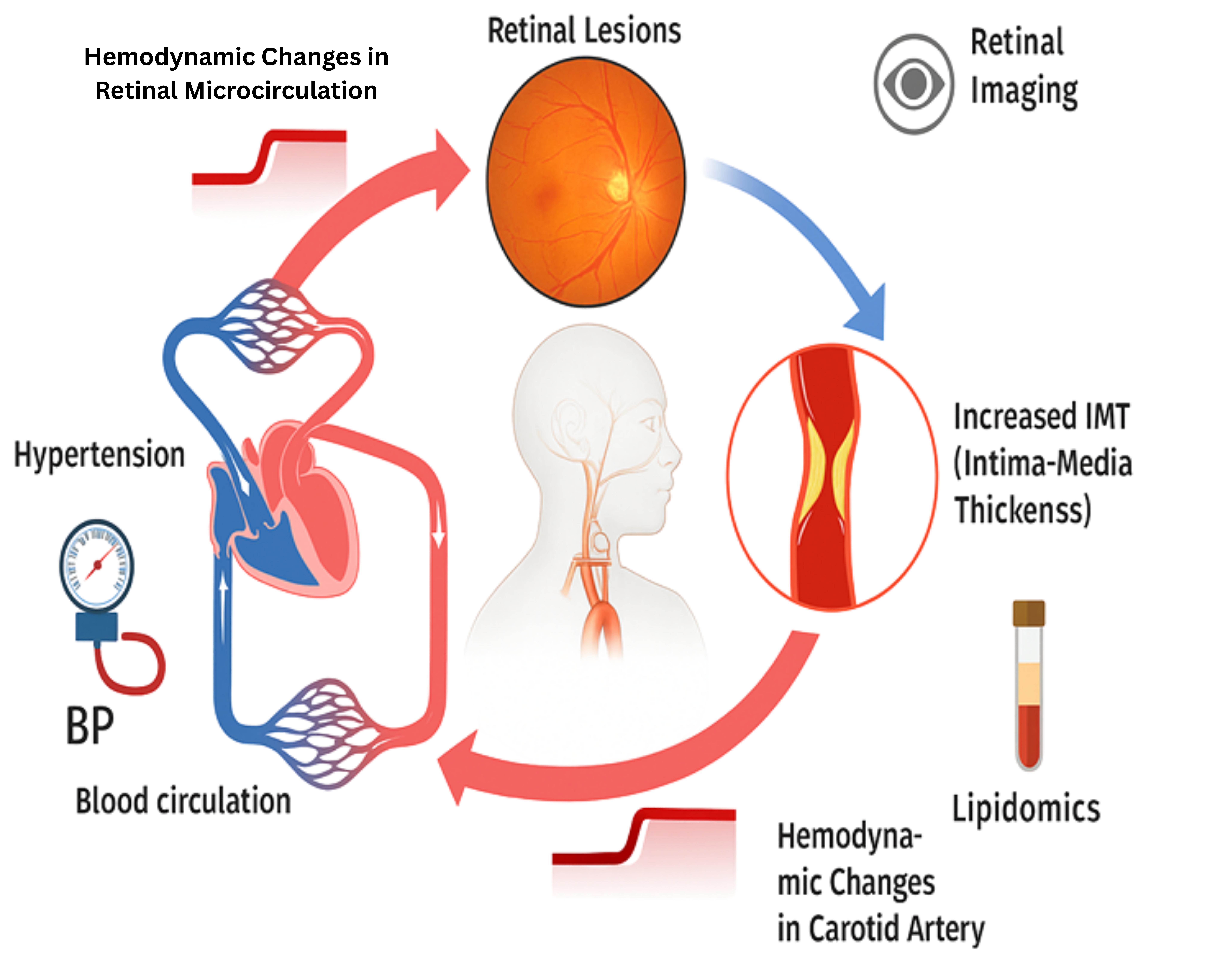
The retina provides a uniquely accessible view of vascular and neurological health. My work studies fine-grained retinal traits, including vessel calibre, tortuosity, density, and fractal geometry, and examines how these features relate to clinical phenotypes, lipidomic profiles, and genetic variation.
A central aim of this research is not only to identify associations, but to understand the biological structure and mechanisms underlying them. To do that, I develop and apply mathematical, statistical, and interpretable machine learning methods for high-dimensional biomedical data, including causal and mediation modelling, pathway-aware representations, and network-based analysis.
By integrating retinal imaging with clinical, lipidomic, and genetic data, my research explores how information propagates across biological scales, from molecular regulation and inherited predisposition to vascular morphology and disease risk. This integrative perspective supports the study of biological pathways, regulatory interactions, and cross-modal dependencies, rather than treating each data source in isolation.
This work aligns closely with the emerging field of oculomics, which leverages ocular biomarkers derived from advanced imaging to infer systemic health and disease. My broader research interests include multimodal data integration, explainable and trustworthy AI for healthcare, and the development of computational methods that prioritise interpretability, robustness, and translational relevance.
Research Focus
- Oculomics and retinal biomarkers for systemic cardiovascular, metabolic, and neurological health.
- Interpretable machine learning for biomedical imaging and multimodal health data.
- Causal and mediation modelling for pathway-level biological interpretation.
- Multi-omics integration linking retinal phenotypes with lipidomic, genetic, and clinical measurements.
News & Updates
Featured In The News
Forbes: How Artificial Intelligence Makes Eye Exams a Gateway to Whole-Body Wellness
November 5, 2025 | Forbes
Forbes featured the broader idea at the center of our paper: The Eye as a Window to Systemic Health: A Survey of Retinal Imaging from Classical Techniques to Oculomics. The article emphasizes how AI-enabled eye exams can act as a gateway to whole-body wellness by revealing systemic cardiovascular, metabolic, and neurological signals from retinal imaging.
10 Aug 2026
A Dual-Edge Spatial-Jacobian Image Graph for Interpretable Diabetic Retinopathy Grading has been accepted to the UKAIRS 2026 Symposium in the Emerging Research track.
View submission details
15 Jun 2026
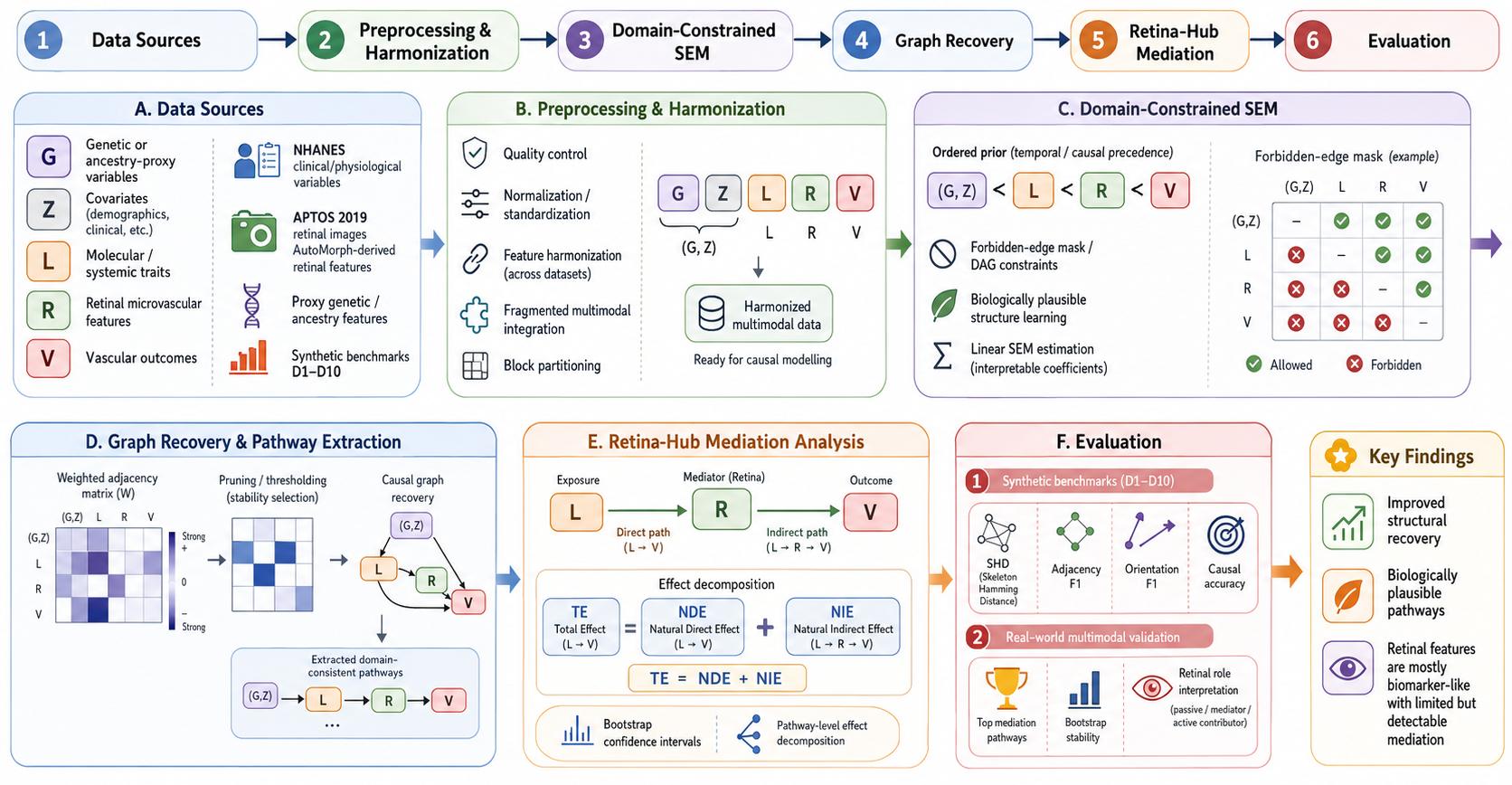
RetiSEM: Generalising Causal Models for Fragmented Biomedical Data has been accepted for oral presentation at IJCAI 2026.
View OpenReview
14 Jul 2026
A detailed reflection on how the formulas that once felt empty at school later became part of the practical language of modelling, proof, simulation, machine learning, and medic...
Read update
19 Apr 2026
Euler's identity, e^{i\pi}+1=0, links five fundamental constants in one compact equation and opens a doorway to complex numbers, geometry, waves, and modern computation.
Read update
15 Feb 2026
A detailed, reproducible guide to run the official AutoMorph pipeline locally or on HPC/SSH, with validated setup steps, resolution calibration, outputs, quality controls, and publication-ready reporting.
Read update
View all updates
Background
My academic path has evolved through interdisciplinary training, professional experience, and a sustained interest in medically relevant computational research.
Before beginning my doctoral studies, I completed a Master’s degree in Computer Science, with a strong focus on artificial intelligence for medical imaging. That training gave me practical experience in image analysis, computational modelling, and data-driven approaches to biomedical problems.
Prior to this, I earned a Bachelor’s degree with combined emphasis on physics, mathematics, and computer science, which provided a strong foundation in analytical reasoning, mathematical formulation, and algorithmic thinking. Earlier, I also completed a three-year diploma in civil engineering and accumulated more than twelve years of professional experience in that field. That engineering background continues to shape my research through systems thinking, pragmatism, and attention to real-world constraints.
My motivation to work on health-related problems is also rooted in personal experience. I come from Bajaur Agency, a remote tribal region in Pakistan near the Pakistan-Afghanistan border, where access to healthcare infrastructure, medical services, and medication has historically been limited. Growing up in that environment shaped my awareness of health inequities and strengthened my commitment to medically relevant research.
Although circumstances prevented me from pursuing a conventional medical career, the motivation remained. Over time, I came to see computational science, engineering, and data-centric methods as powerful ways to contribute to medical research and healthcare delivery. That realization gradually brought together my interests in physics, mathematics, computer science, engineering, and medical imaging into a single research trajectory.
My current PhD work is the synthesis of these experiences. By combining retinal imaging with clinical, molecular, and genetic data, and by using mathematical, statistical, and interpretable machine learning methods to model complex biological relationships, I aim to generate mechanistic insight from non-invasive data sources.
Research Keywords
Artificial Intelligence, Machine Learning, Interpretable Models, Causal and Mediation Analysis, Graphical and Network Models, Bayesian Methods, Mathematical Modelling, Medical Imaging, Retinal Microvasculature, Oculomics, Multi-Omics Integration, Genetic Variation, Clinical Phenotyping, Systemic Disease, Biomarker Discovery, Precision Medicine
Recent Publications
Featured Conference Paper
RetiSEM: Generalising Causal Models for Fragmented Biomedical Data
2026 | Accepted (Oral) | IJCAI 2026
RetiSEM presents a causal modelling framework for fragmented biomedical data, designed to recover interpretable structure under incomplete, multimodal, and distributed evidence settings.
2026 Under Review (Conference Submission)
Causal-RetiGraph: Cross-Cohort Retinal Support and Same-Subject Pathway Analysis for Diabetic Retinopathy
Premier Biomedical and Bioinformatics Venue
Introduces Causal-RetiGraph, a biomedical informatics framework linking interpretable retinal graph phenotypes with NHANES-anchored pathway modelling for diabetic retinopathy.
2026 Accepted
Dual-Edge Spatial-Jacobian Image Graph Framework for Interpretable DR Grading
UKAIRS 2026 Symposium (Emerging Research Track)
Introduces a dual-edge spatial-Jacobian image graph framework for interpretable diabetic retinopathy grading by combining vessel-lesion spatial edges with Jacobian-based lesion-biomarker edges.
2025 Accepted (Oral Presentation; Springer proceedings forthcoming)
Retinal Lipidomics Associations as Candidate Biomarkers for Cardiovascular Health
Proceedings of 2025 International Conference on Medical Imaging and Computer-Aided Diagnosis (MICAD 2025)
Explores links between retinal microvascular traits and lipidomic profiles to identify candidate non-invasive biomarkers for cardiovascular risk.
View all publications